


Title : Breast Tri-Mark (BTM) portable diagnostic device for early breast cancer detection
Abstract:
Problem Description: Breast cancer is the most commonly diagnosed cancer worldwide, with approximately 2.3 million new cases and 670,000 deaths annually, and nearly 70% of deaths occurring in low- and middle- income countries (LMICs) due to late-stage diagnosis. Current molecular diagnostics for breast cancer subtyping (HER2, ER, PR) rely on biopsy-based immunohistochemistry (IHC) and FISH, which are expensive, centralized, labor-intensive, and slow, often requiring months for results. Limited diagnostic infrastructure, severe shortages of oncologists and pathologists, and high out- of-pocket costs result in delayed treatment, catastrophic health expenditure, and preventable mortality. There is a critical need for a portable, affordable, and rapid molecular diagnostic solution that enables early detection and equitable access at the point of care.
Solution Concept: The Breast TRI-MARK (BTM) device is a nano-enabled, portable diagnostic point of care device designed to detect and quantify breast cancer molecular subtypes (HER2, ER, PR). The device has two parts:
•A low-cost disposable silver-electrode biosensor, and
•A reusable, battery-powered digital reader.
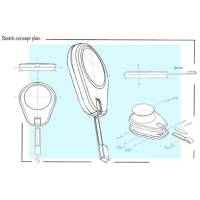
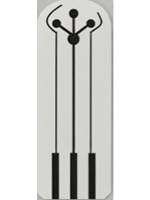
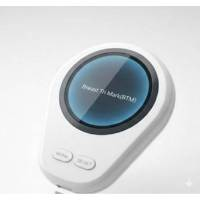
BTM delivers laboratory-level molecular accuracy within <20 minutes using a blood sample. The design prioritizes affordability, portability, and ease of use, enabling deployment in primary health facilities, mobile clinics, and underserved settings. The solution aligns with the needs of patients, clinicians, health systems, and policymakers by reducing diagnostic delays, improving early treatment decisions, and strengthening health equity.
Reduction to Practice: A functional proof-of-concept prototype has been developed and experimentally validated using electrochemical differential pulse voltammetry (DPV) with Sensit Smart potentiostat and PSTrace software.
Key analytical performance results for biomarkers (HER2, ER and PR) detection include:
- Sensitivity: 0.0671 μA per log10[concentration]
- Linearity: R² = 0.982 across a wide dynamic range
- Limit of Detection (LOD): 0.014 ng/mL (14 pg/mL)
- Limit of Quantification (LOQ): 0.047 ng/mL (47 pg/mL)
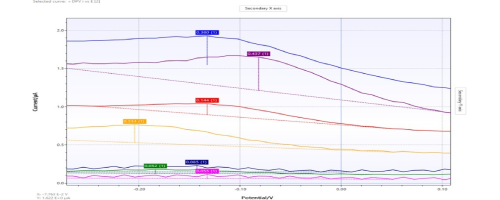
The results demonstrate high sensitivity, strong linearity, low background noise, and clinically relevant detection limits, supporting feasibility for early-stage breast cancer screening. Prototype renderings and experimental data confirm readiness for pilot-scale validation.
Pathway to Implementation: The next phase will be expanded clinical validation, regulatory approval, and pilot deployment in Ethiopia and India. Next steps include:
1. Expanded clinical validation against IHC/FISH standards redesign the reader
2. Regulatory pathway for the reader and biosensor
3. Strategic partnerships with health ministries, NGOs, and diagnostic manufacturers
4. Pilot implementation within Ethiopian and Indian national breast cancer programs
The BTM device is designed for scalable manufacturing, low-cost disposable biosensors and reusable readers, with strong potential for mass production and global expansion.

