
Global Conference on Public Health & Epidemiology
October 22-24, 2026

Public Health Ethics
Public Health Ethics focuses on the moral principles and values that guide public health practice and decision-making. It addresses ethical challenges that arise when protecting population health while respecting individual rights and freedoms. Key principles include justice, equity, beneficence, non-maleficence, autonomy, and transparency. Public health ethics is especially important in areas such as disease surveillance, vaccination programs, quarantine measures, resource allocation, and use of personal health data. Ethical decision-making ensures that public health interventions are fair, proportionate, and evidence-based, particularly when actions may limit individual choice for the greater good. Public health ethics also emphasizes protecting vulnerable populations and reducing health disparities. By promoting accountability, public trust, and social responsibility, public health ethics supports effective and equitable public health policies and strengthens the relationship between public health institutions and communities.

Adele Ann Webb
Strategic Education, Inc., United States
Ann Marie Leonard Zabel
Curry College, United States
Thomas J Webster
Brown University, United States
Mariano Votta
Italian NGO Cittadinanzattiva, Italy
Ashot Khachatryan
National Academy of Sciences of the Republic of Armenia, Armenia
Ches Jones
University of Arkansas, United States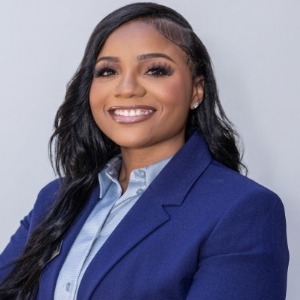
Adeva A Elem
Mercer University, United StatesSubmit your abstract Today


Title : Artificial radionuclides and evolutionary mismatch: Vulnerability of the colon, pancreas, diabetes, and arteries
Sebastiano Venturi, Department of Public Health of Rimini, Italy
Title : Specific strategies over the life course for early identification, prevention, treatment, and long-term support
Christopher Ashton, Center for Recovery, Canada
Title : Population health, public health and the social determinants of health: The state of the science
Adele Ann Webb, Strategic Education, Inc., United States
Title : The nutritional management of healthy menu plans
Iuliana Vintila, Dunărea de Jos University of Galați, Romania
Title : Healthcare system profiles and pandemic outcomes: A cross-country multi-dimensional scaling analysis of Cuba, Spain, Italy, and Germany
Giuseppe Orlando, University of Bari Aldo Moro, Italy
Title : Change your genes – change your life: Epigenetics of longevity
Kenneth R Pelletier, USCF School of Medicine, United States